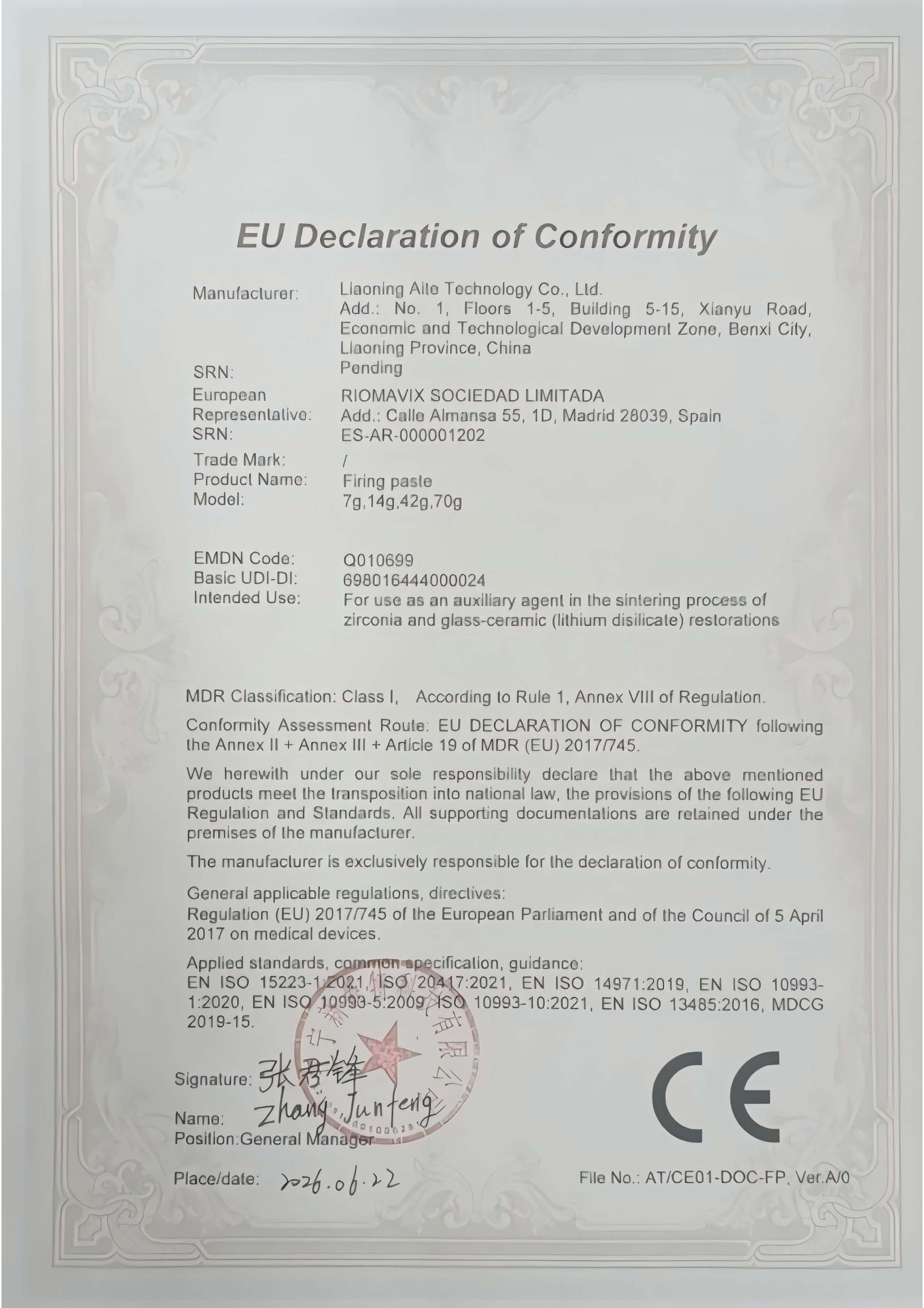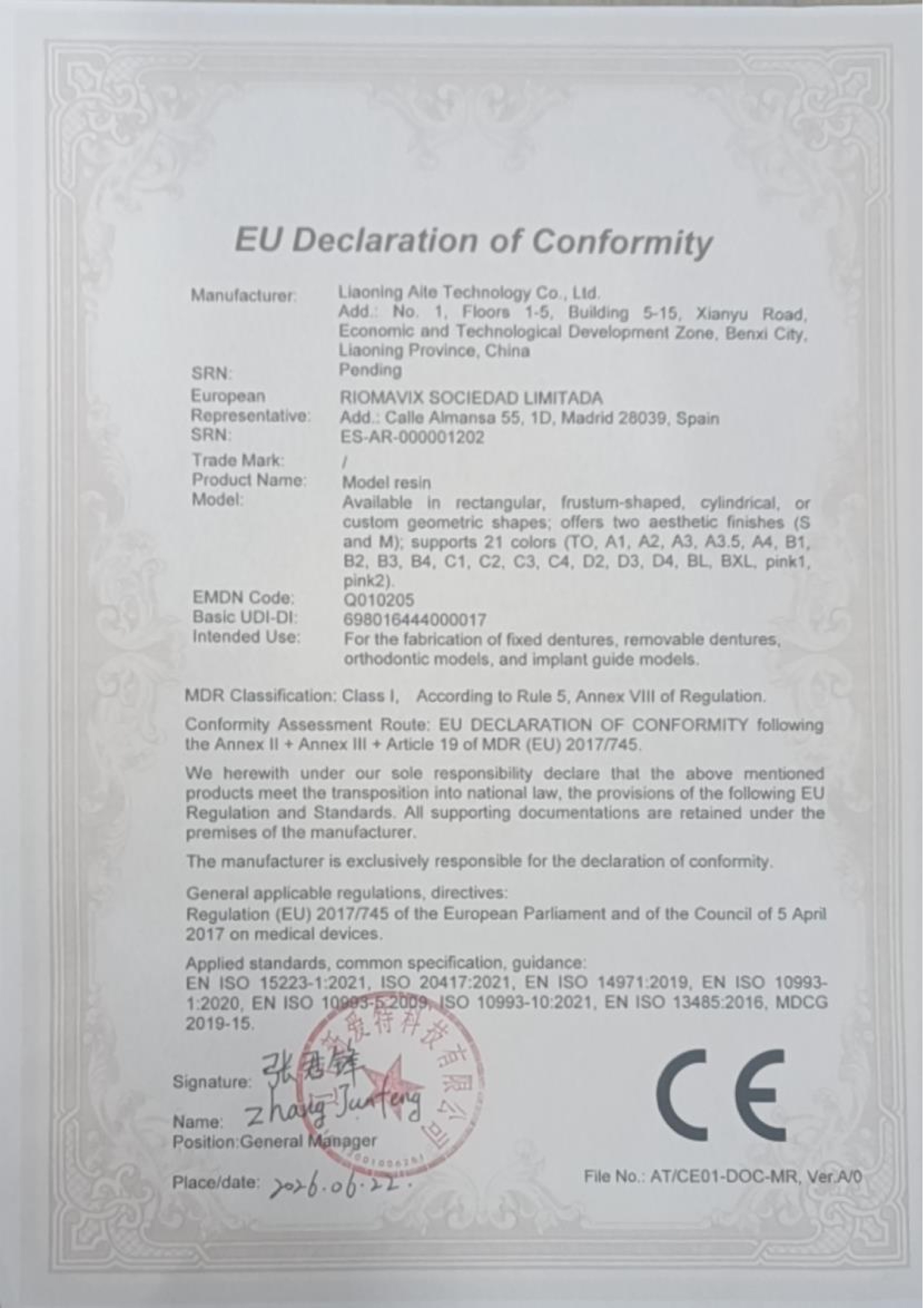
 EN
EN

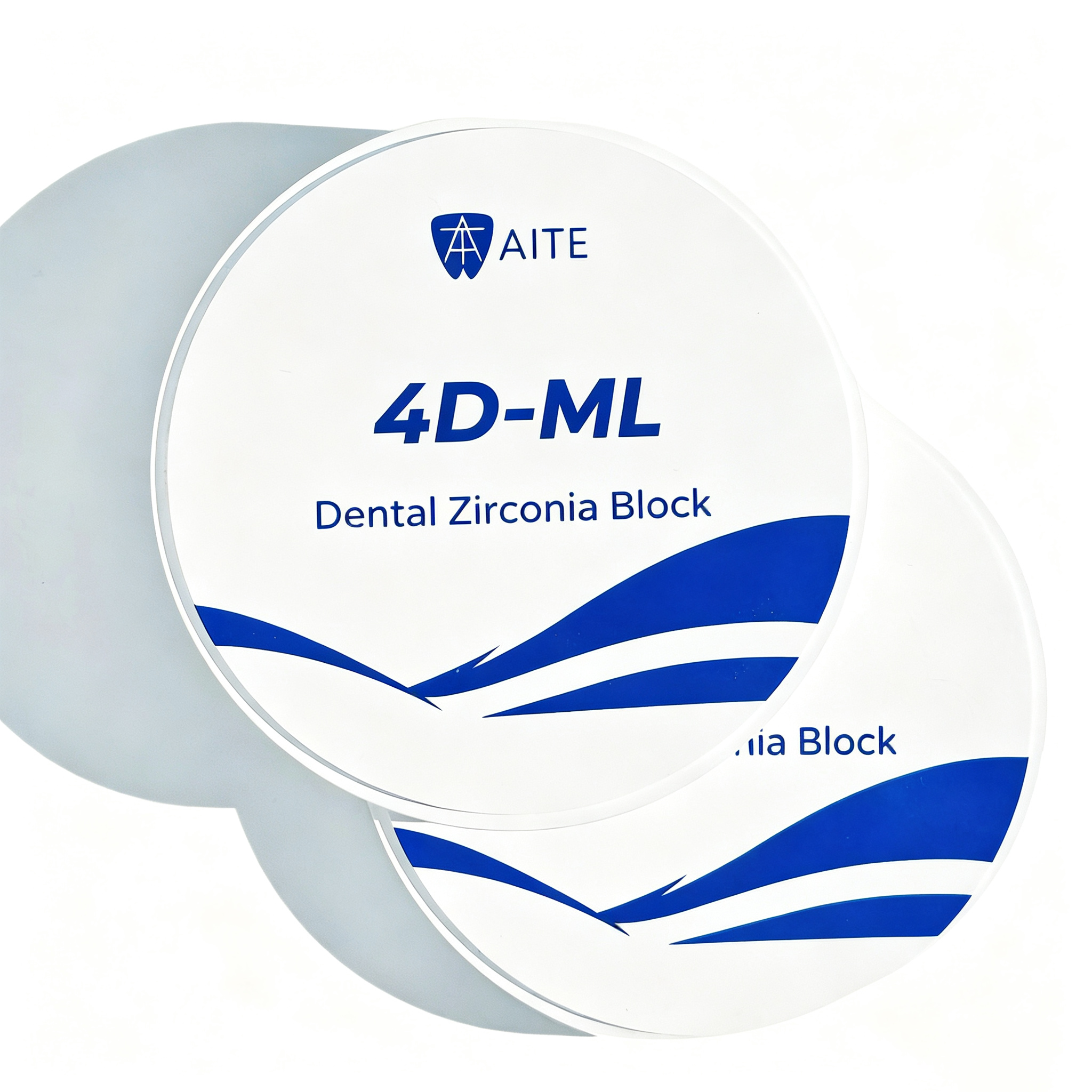
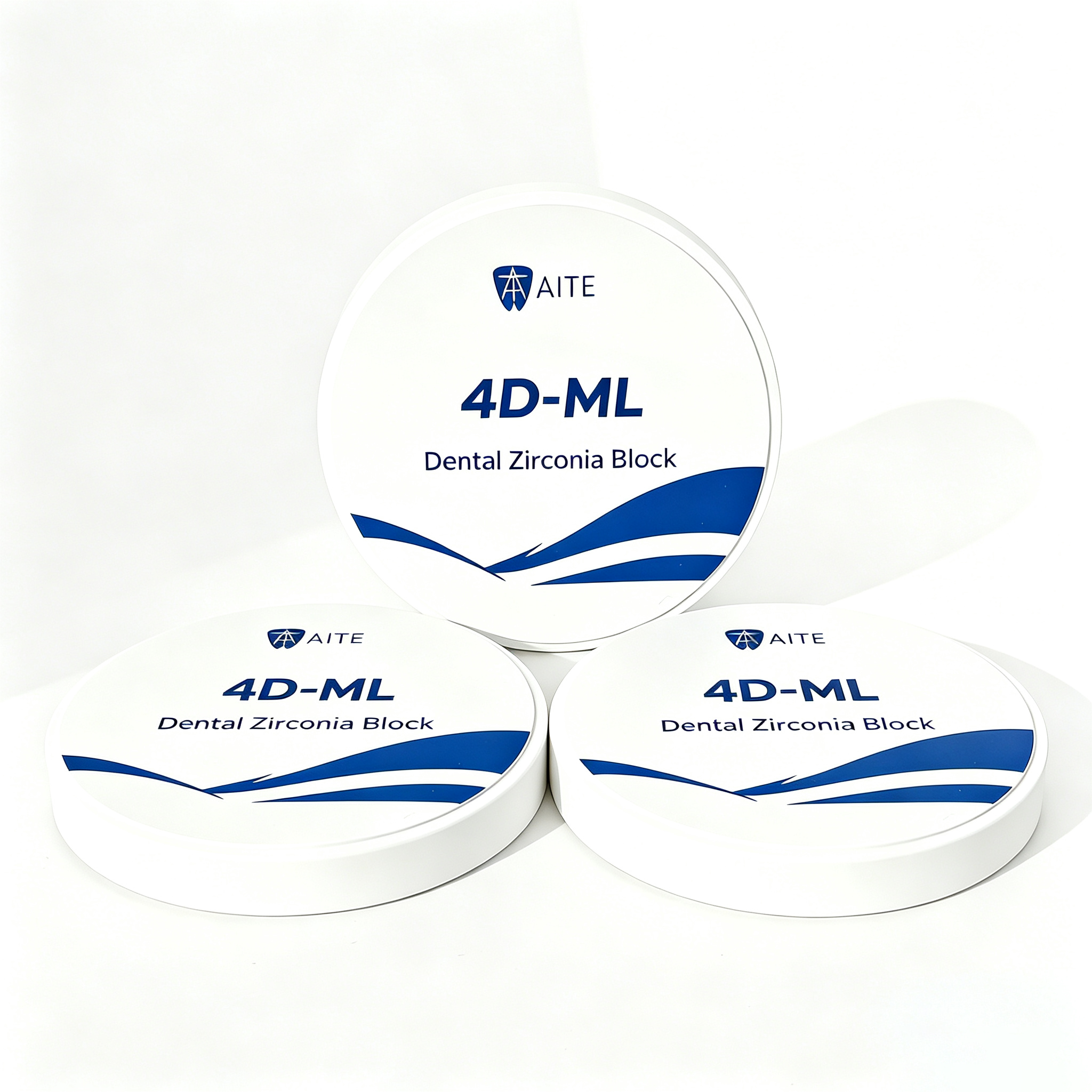
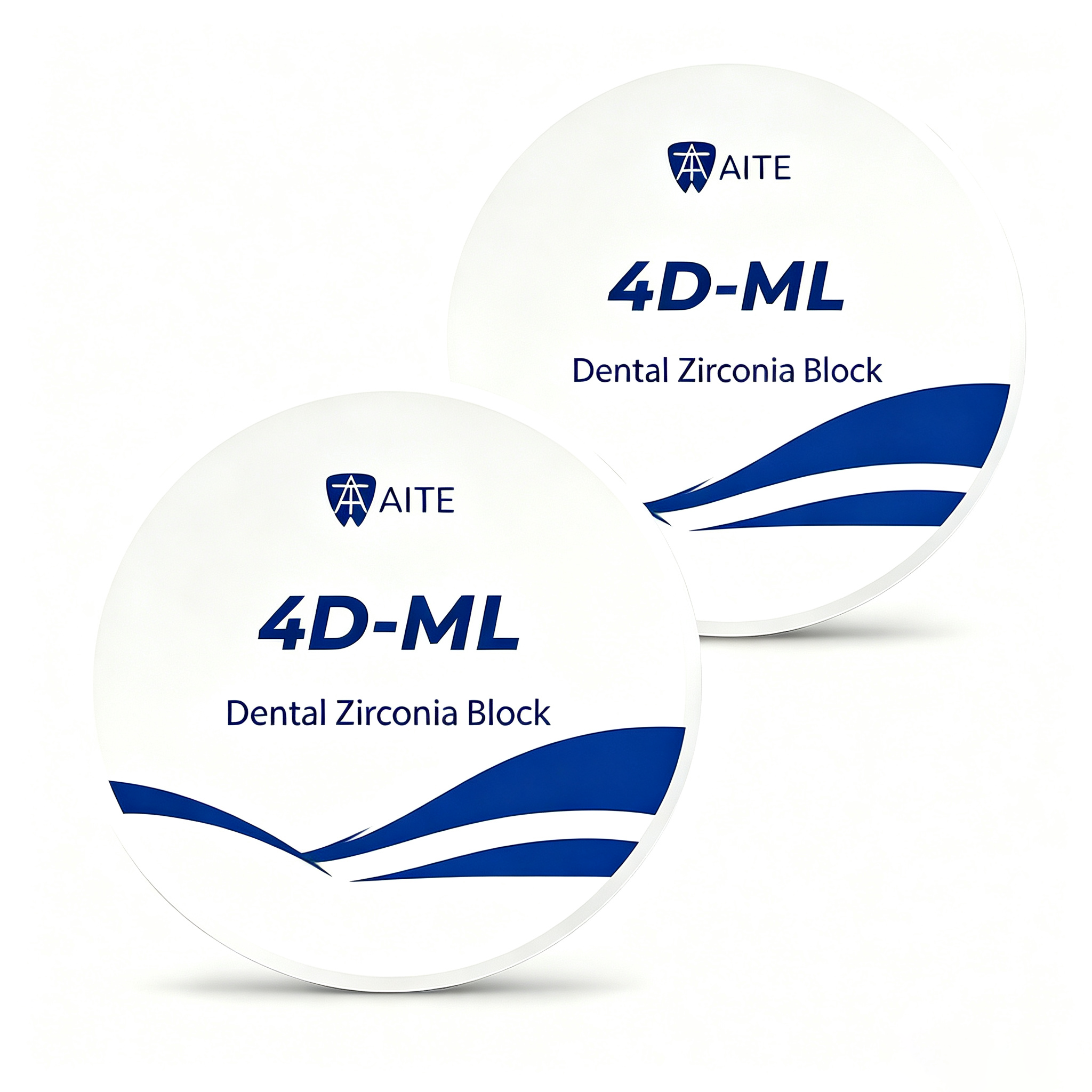
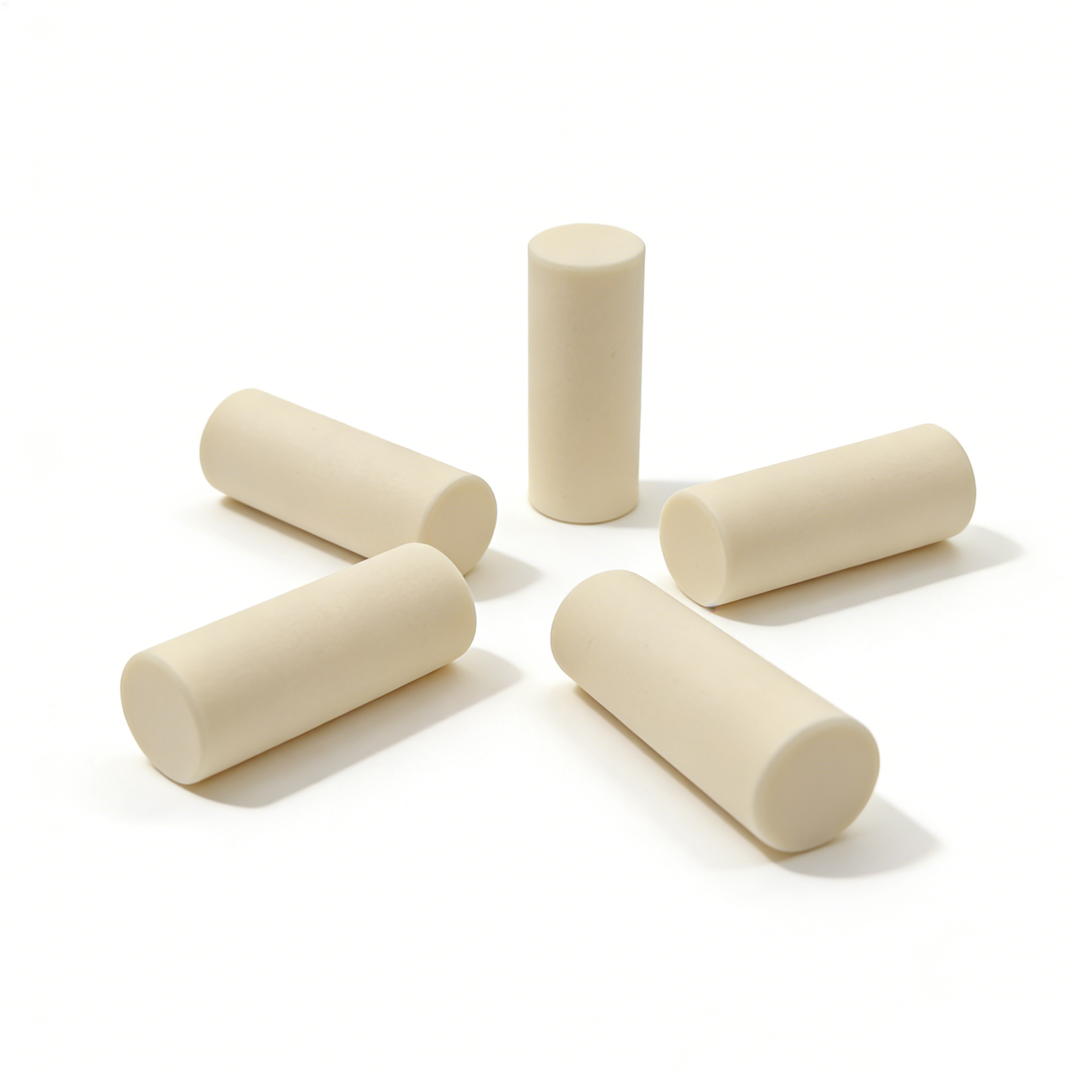
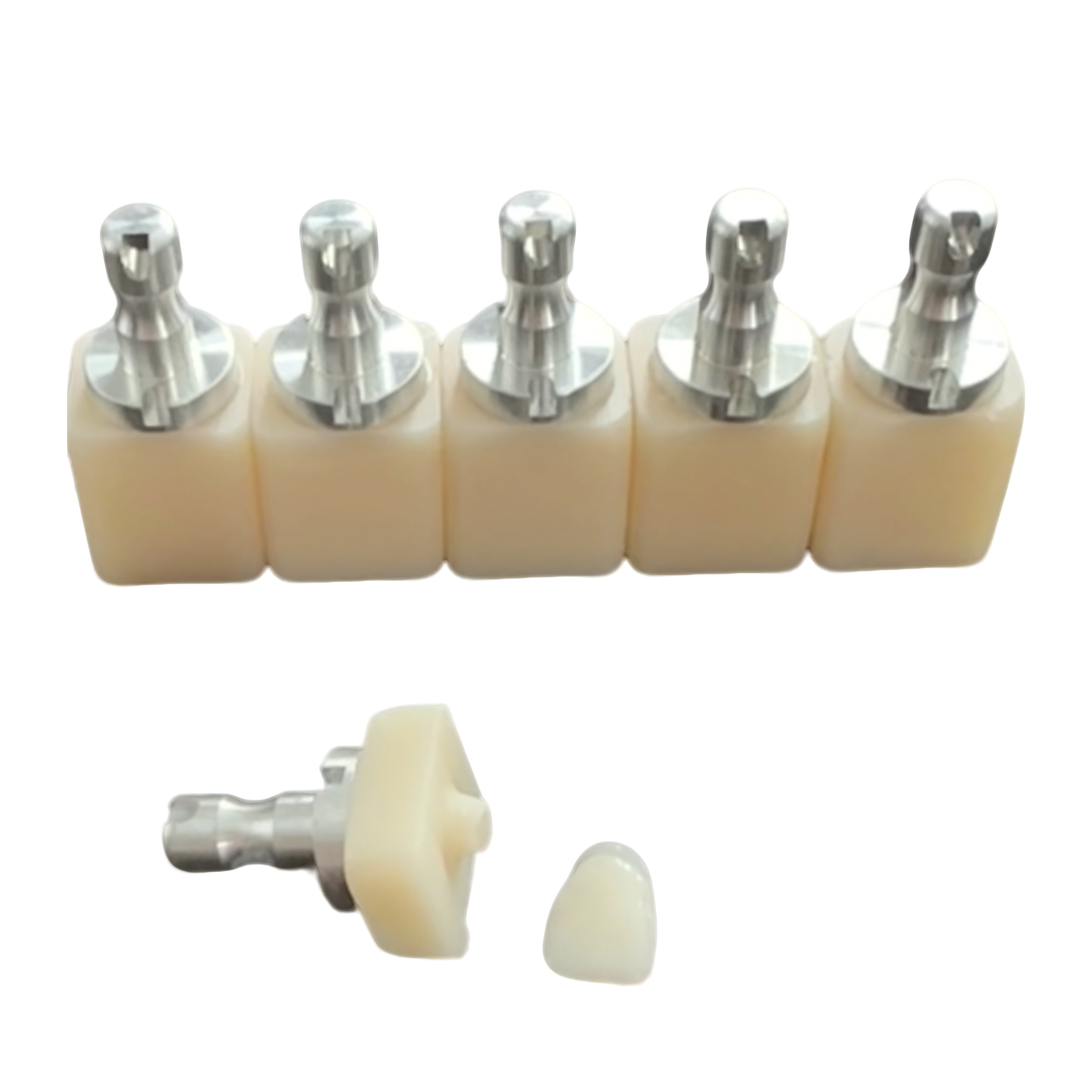
4Dzirconia blocks
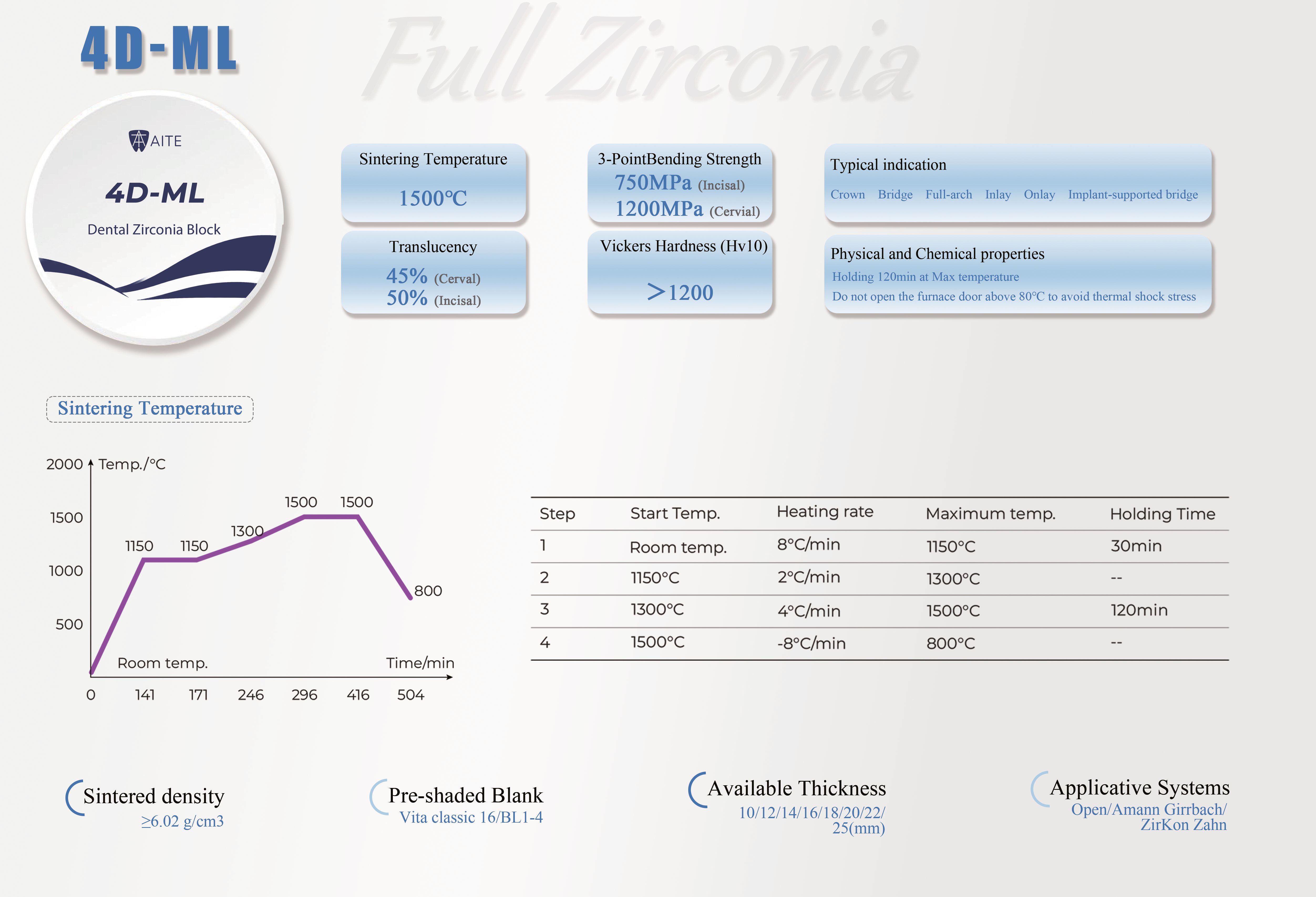
Product parameter data of 4D-ML all zirconia dental zirconia block, sintering temperature of 1500 ℃, neck area semi transparent 45%, cutting end semi transparent 50%; Three point bending strength cutting end 750MPa, neck area 1200MPa, Vickers hardness>1200, sintering density ≥ 6.02g/cm ³, suitable for crown, bridge, full arch, inlay, high inlay, and implant supported bridge restoration; The sintering process is divided into four stages. The room temperature is raised to 1150 ℃ at a rate of 8 ℃/min for 30 minutes, then raised to 1300 ℃ at a rate of 2 ℃/min, followed by raising to 1500 ℃ at a rate of 4 ℃/min for 120 minutes, and finally cooled to 800 ℃ at a rate of -8 ℃/min; Physical and chemical precautions: Keep the maximum temperature at 120 minutes. Do not open the furnace door when the temperature inside the furnace exceeds 80 ℃ to avoid thermal shock; The product is a pre dyed body, matched with Vita classic 16/BL1-4 color codes, with an optional thickness of 10-25mm, compatible with Open, Amann Girrbach, ZirKon Zahn processing systems.
- Overview
- Recommended Products
Core physical and chemical properties of the product: sintering temperature of 1500 ℃, achieving layered transparency effect, with a 45% transmittance at the neck and a 50% transmittance at the cutting end, restoring the natural gradual transparency effect of teeth from neck to cutting; The three-point bending strength at the cutting end is 750MPa, and the tooth neck can reach up to 1200MPa. The Vickers hardness Hv10 is greater than 1200, and the sintering density is ≥ 6.02g/cm ³. The high strength can support long bridges and full arch restorations, while retaining aesthetic transparency at the cutting end, solving the pain points of insufficient strength and poor transparency of traditional high transparency zirconia.
Clinical indications cover dental crowns, fixed bridges, full arch restorations, inlays, high inlays, implant supported bridges, posterior weight-bearing restorations, and anterior aesthetic restorations.
The supporting standard sintering curve is divided into four stages: heating at room temperature at 8 ℃/min to 1150 ℃ and holding for 30 minutes; Heat up again at a rate of 2 ℃/min to 1300 ℃; Subsequently, the temperature was raised to a maximum sintering temperature of 1500 ℃ at a rate of 4 ℃/min and held for 120 minutes; Finally, cool to 800 ℃ at a rate of -8 ℃/min. Key tips for process use: It is necessary to ensure a maximum temperature insulation of 120 minutes. If the furnace chamber temperature is above 80 ℃, it is strictly prohibited to open the furnace door to prevent thermal shock and avoid cracking, hidden cracking, and deformation of the repaired body.
The body is a pre dyed blank, compatible with Vita classic 16 colors and BL1-4 bleached white series, and compatible with mainstream color systems; The blank thickness specification is 10/12/14/16/18/20/22/25mm, compatible with mainstream milling equipment such as Open, Amann Girrbach, and ZirKon Zahn. Dental processing plants can directly machine cutting without replacing hardware.
 Physical characteristics