 EN
EN

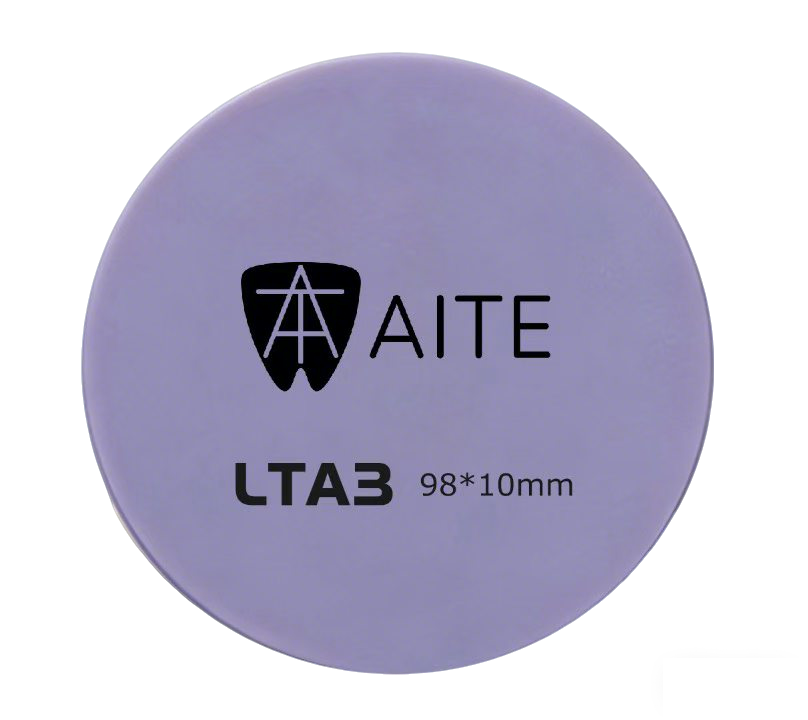
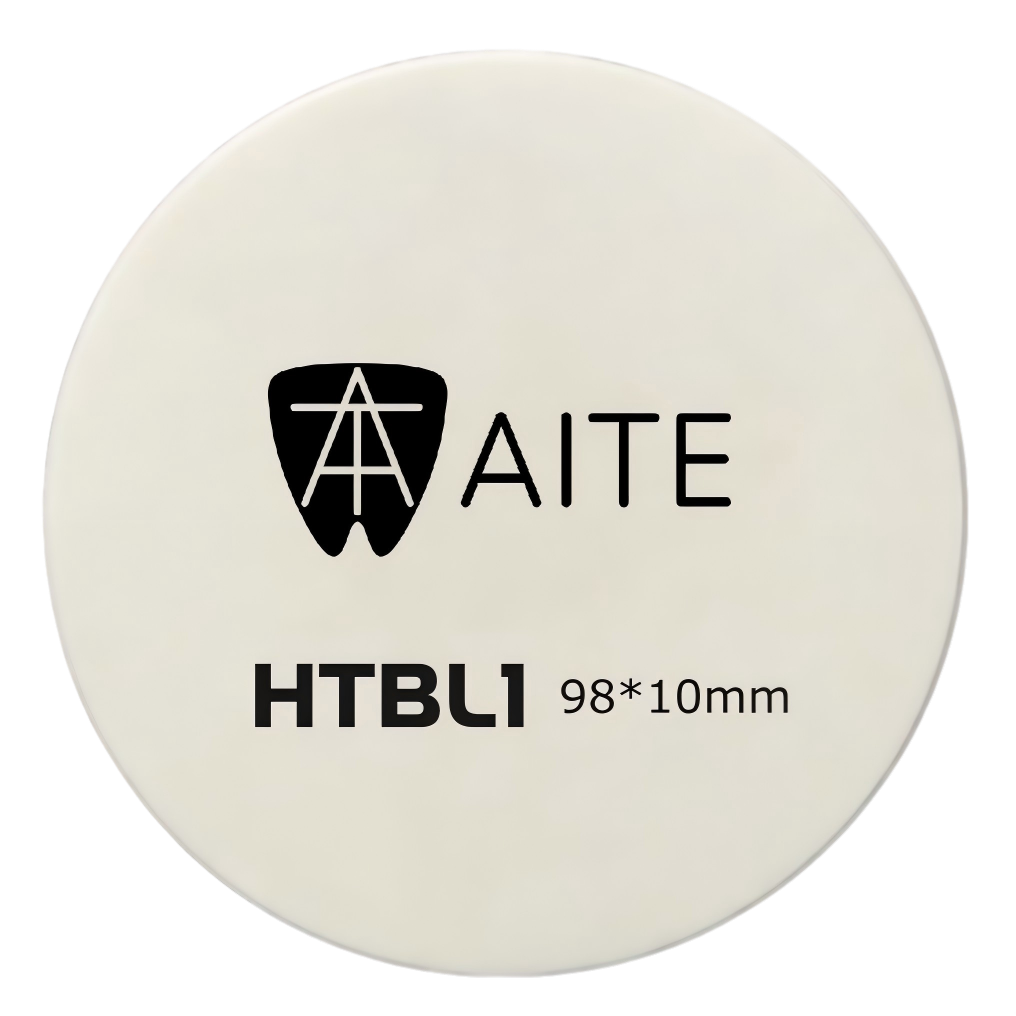
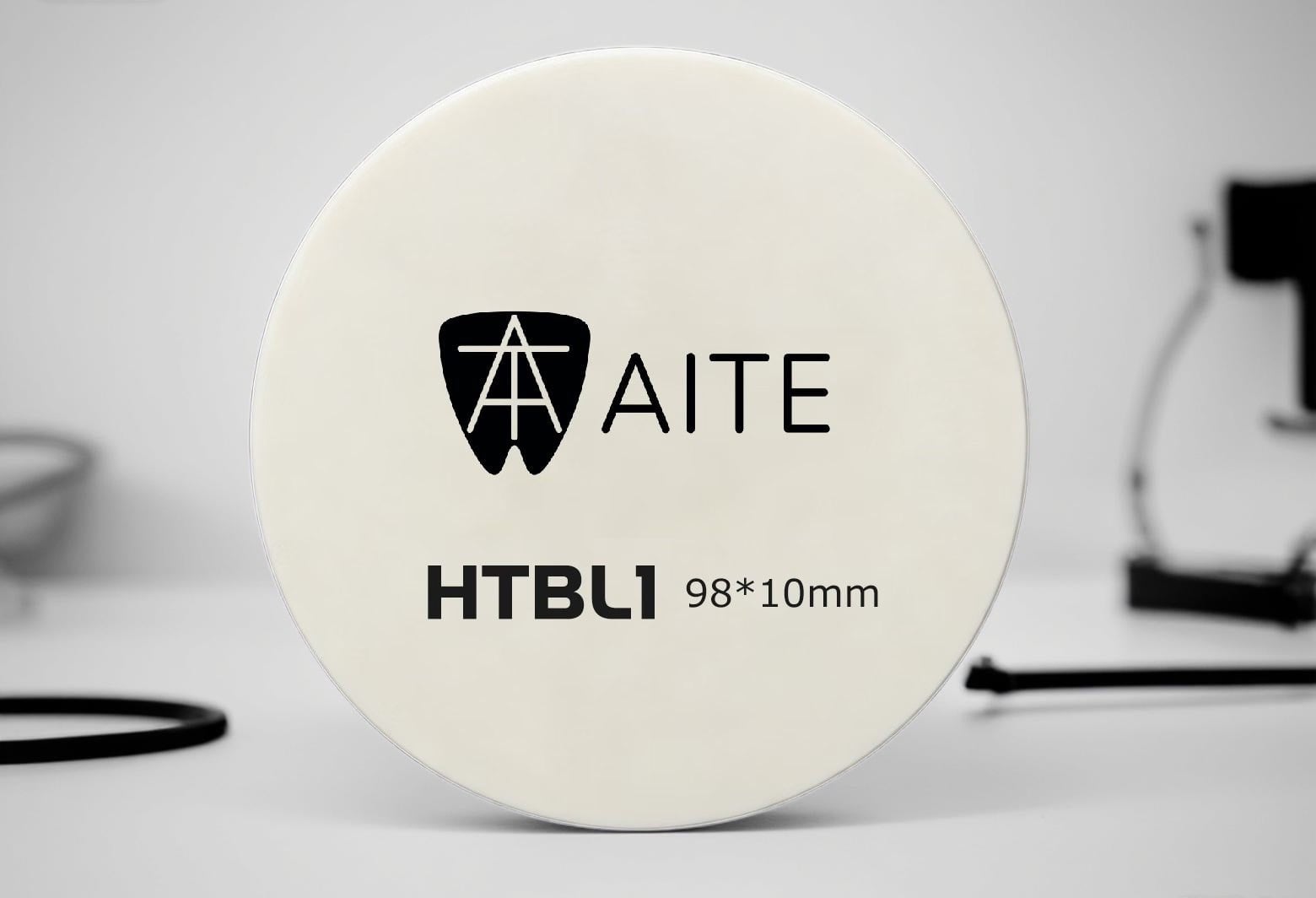
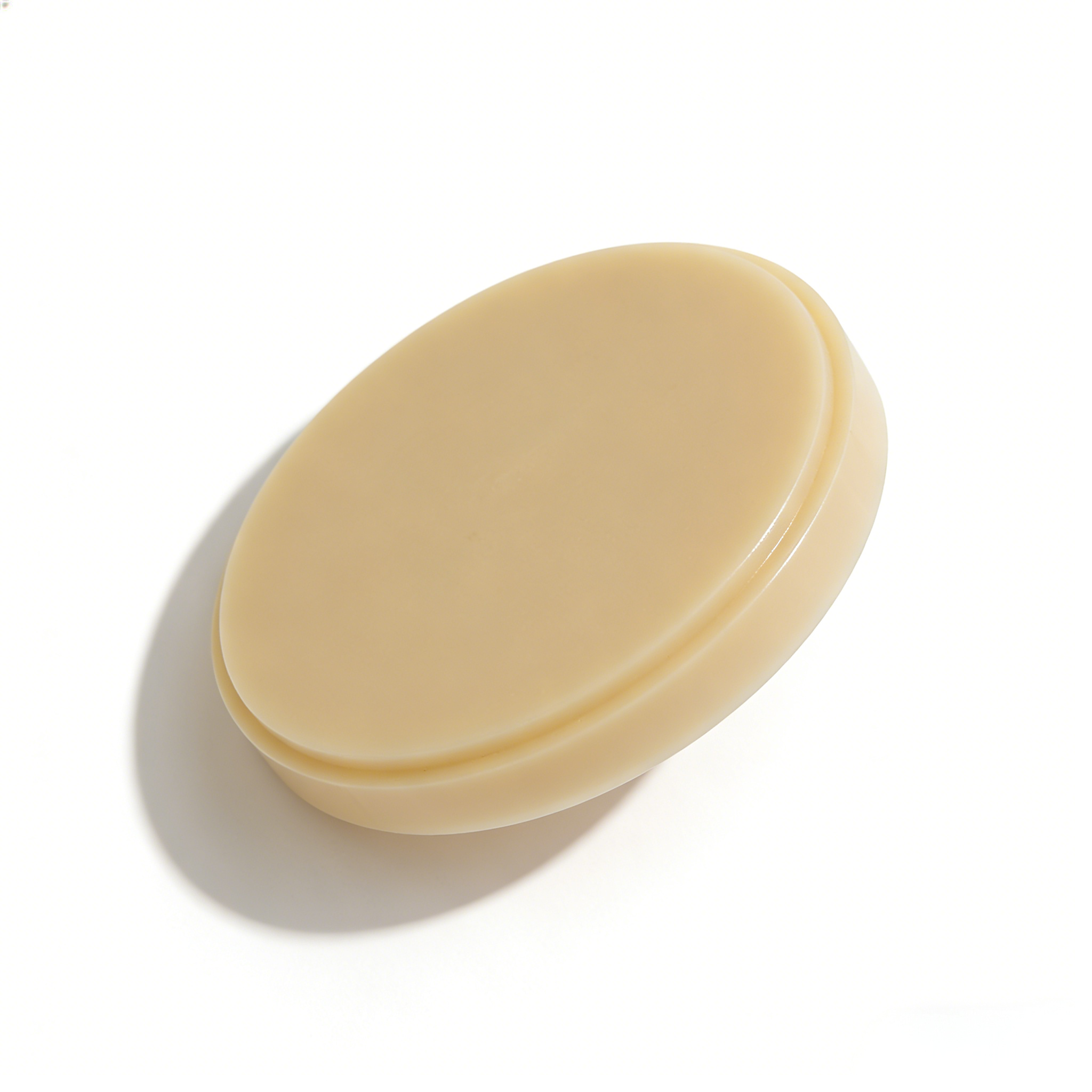
Lithium Disilicate Glass Ceramic Disc
AITE Dental Lithium Disilicate Glass Ceramic Disc Product Introduction:
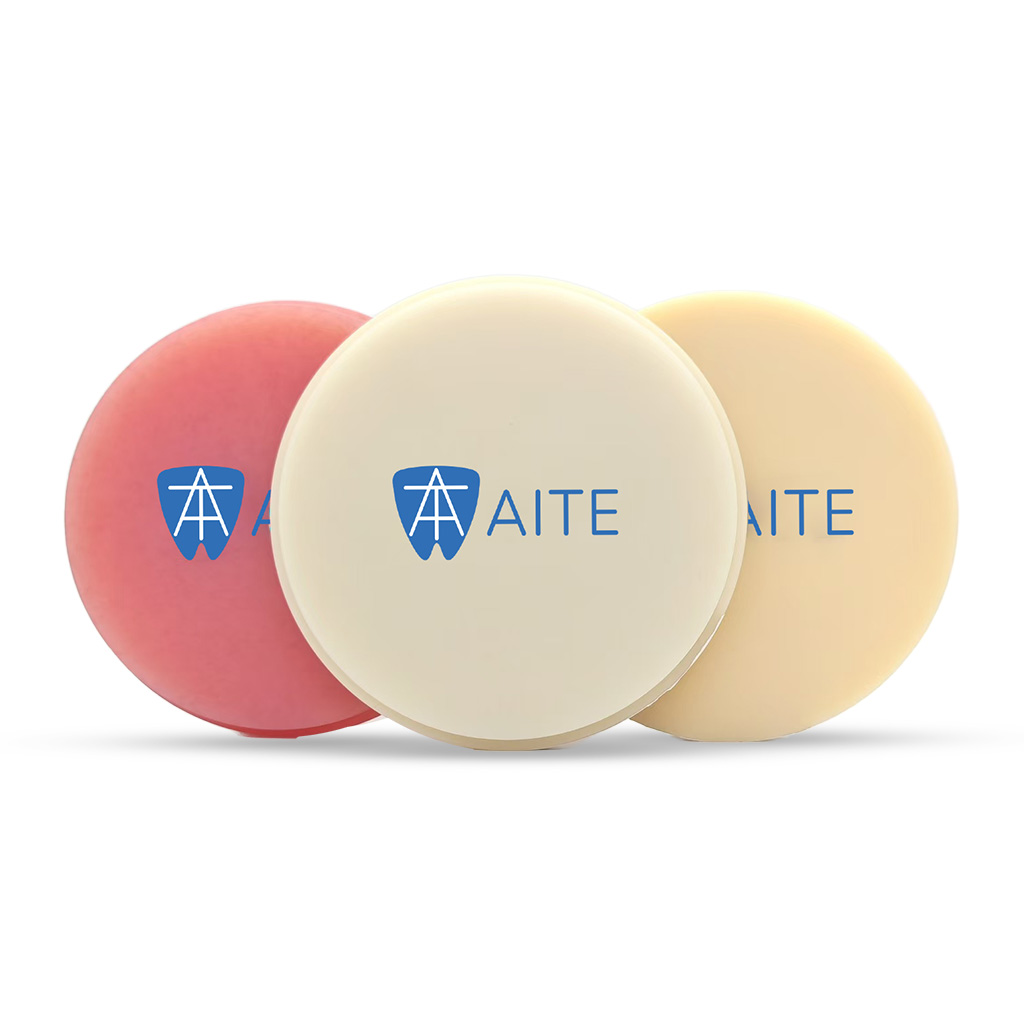
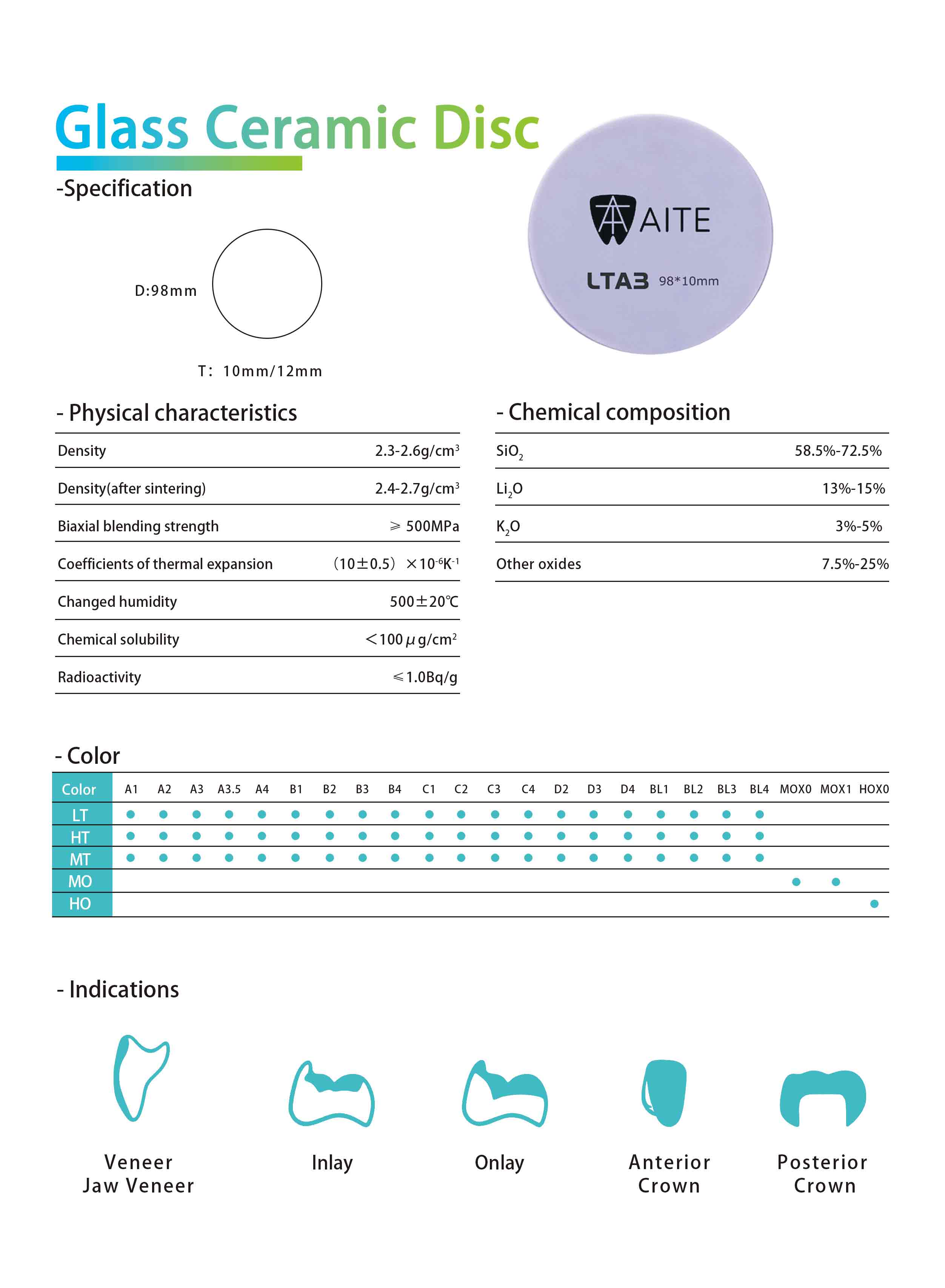
AITE glass ceramic disc is a professional dental repair substrate suitable for CAD/CAM digital milling systems, with a standard diameter of 98mm and two thickness specifications of 10mm and 12mm. It has complete and standardized physical and chemical properties and rich clinical compatibility options.
- Overview
- Recommended Products
Stable and reliable physicochemical and chemical properties
The main components of the substrate are silicon dioxide, lithium oxide, potassium oxide, and composite oxides, with a scientifically balanced formula; The green density is 2.3-2.6g/cm ³, and after sintering, the density increases to 2.4-2.7g/cm ³. The biaxial bending strength is ≥ 500MPa, and the mechanical strength is excellent. It is not easy to crack during processing and use; Stable and controllable coefficient of thermal expansion, suitable for conventional 500 ± 20 ℃ sintering process; Chemical solubility<100 μ g/cm ², corrosion and discoloration resistance in the oral cavity, radioactivity ≤ 1.0Bq/g, biosafety compliance, long-term wear without irritation risk.
Multi transparent full-color system, covering various repair needs
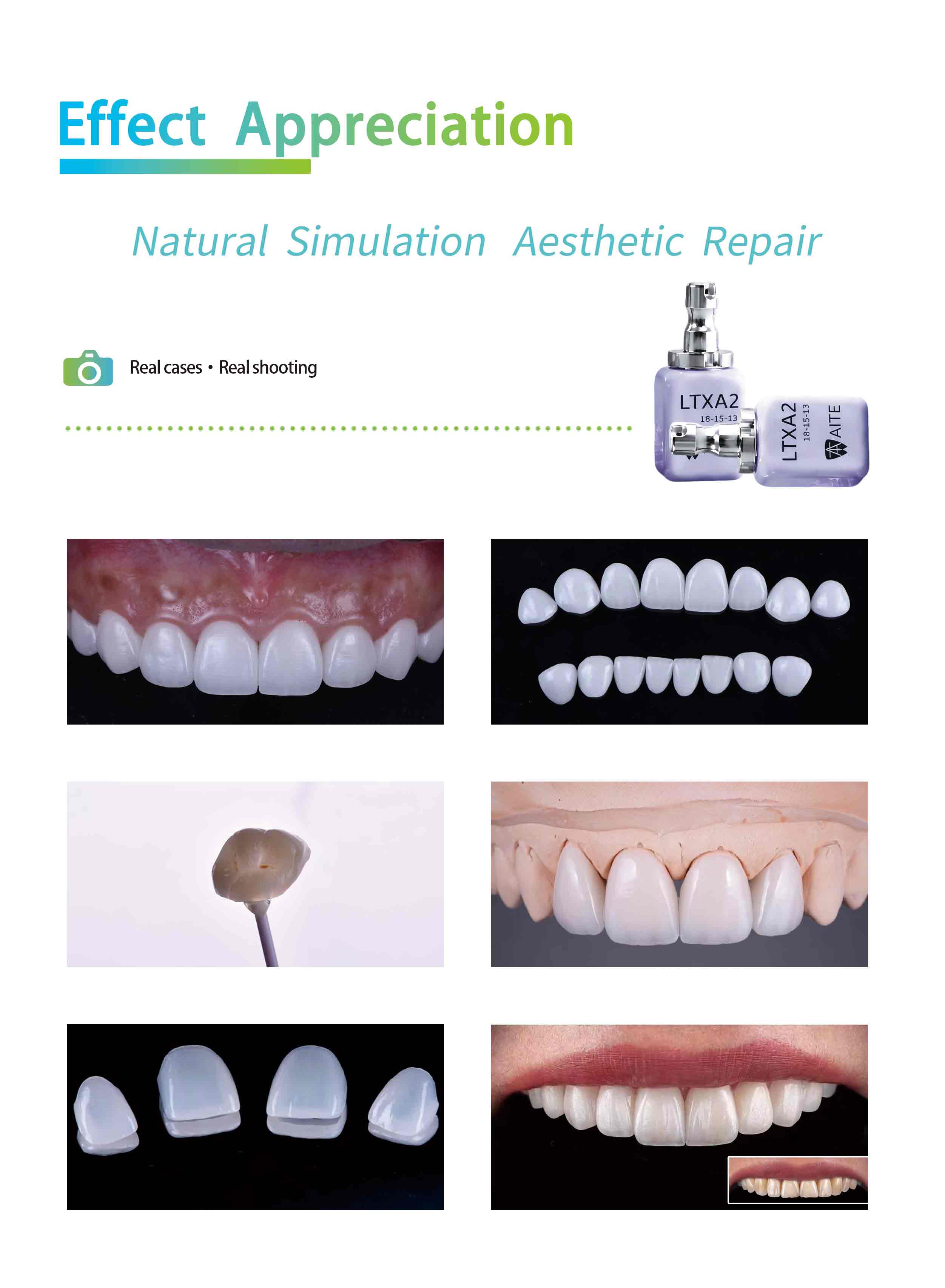
The product is divided into five major translucent series: LT low transmittance, HT high transmittance, MT medium transmittance, MO shading, and HO high shading. It fully covers VITA standard A/B/C/D, BL, MOX, and HOX full-color series, which can meet different clinical background color needs and have high aesthetic restoration.
Widely applicable clinical scenarios
It can mill and process ultra-thin veneers, jaw veneers, inlays, high inlays, anterior full crowns, and posterior full crowns, balancing minimally invasive aesthetic restoration and posterior chewing load-bearing restoration. It is suitable for mass production in denture processing factories and immediate restoration near dental clinic chairs.
Core advantages of the product
The utilization rate of disc-shaped substrate material is high, and the loss is much lower than that of traditional ceramic blocks; The material hardness conforms to natural enamel and will not cause excessive wear on the teeth; Sintering shrinkage is stable, the edge of the restoration has high tightness, and it is firmly bonded with resin, making it the preferred consumable for digital aesthetic restoration in dental institutions worldwide.