
 EN
The performance and longevity of lithium disilicate dental restorations depend critically on how the sintering furnace processes the restoration at each temperature stage. The sintering furnace profile—the precise sequence of heating rates, peak temperatures, and dwell times—directly influences the crystalline structure, density, and strength properties of the final restoration. Understanding how sintering furnace parameters affect lithium disilicate strength is essential for laboratories and clinicians seeking predictable, durable clinical outcomes.
Lithium disilicate is a glass-ceramic material that undergoes controlled crystallization during the sintering furnace heating cycle. The strength and optical properties of the restoration emerge from how the sintering furnace manages the transformation of the glass phase into lithium disilicate crystals. Poor control over sintering furnace temperature gradients, heating rates, or thermal retention can result in incomplete crystallization, residual stress, or microstructural flaws that compromise restoration strength and clinical performance.
How Sintering Furnace Temperature Profiles Impact Crystal Development
Peak Temperature and Crystal Formation in the Sintering Furnace
The peak temperature setting on a sintering furnace determines how completely and uniformly lithium disilicate crystals form throughout the restoration. When a sintering furnace reaches the optimal peak temperature specified by the material manufacturer, the glass matrix undergoes controlled nucleation and crystal growth, creating a uniform distribution of lithium disilicate crystals. If the sintering furnace operates below the optimal peak temperature, crystal formation remains incomplete, leaving unreacted glass phases and reducing mechanical strength. Conversely, excessive peak temperature in a sintering furnace can cause oversintering, leading to unwanted secondary crystallization phases and potential material weakening.
Heating Rate Control in the Sintering Furnace Cycle
The heating rate programmed into a sintering furnace influences thermal stress distribution within the restoration and affects the kinetics of crystal formation. A sintering furnace with a slower, controlled heating rate allows the restoration to expand more uniformly and reduces the risk of thermal shock, which can introduce microcracks. A sintering furnace operating with overly rapid heating rates may create temperature gradients between the surface and core of the restoration, generating internal residual stresses that weaken the material. The sintering furnace heating rate should be carefully calibrated to ensure the crystallization process occurs in a thermodynamically stable manner, preserving the material's intended mechanical properties and optical clarity.
Dwell Time and Microstructural Integrity During Sintering
Optimal Dwell Duration in the Sintering Furnace
Dwell time is the duration the sintering furnace maintains the restoration at peak temperature, allowing crystal growth and material densification to reach completion. A sintering furnace with insufficient dwell time may not allow adequate time for lithium disilicate crystals to mature, resulting in a porous or incompletely crystallized restoration. Extended dwell time in a sintering furnace promotes full densification and uniform crystal maturation, but excessively prolonged dwell can introduce grain coarsening and secondary phase formation. The sintering furnace dwell protocol must balance the need for complete crystallization with the risk of over-processing, typically achieved through manufacturer-recommended temperature-time curves that specify optimal dwell duration for each restoration type and thickness.
Cooling Protocols and Residual Stress Management
The cooling phase of a sintering furnace cycle is equally critical to the heating phase in determining final restoration strength. A sintering furnace with a controlled, gradual cooling rate allows the crystallized lithium disilicate structure to contract uniformly without generating excessive internal stress. Rapid cooling from the sintering furnace peak temperature can trap residual stresses within the material, making the restoration prone to delayed fracture or edge chipping during clinical use. Many sintering furnace systems incorporate staged cooling programs that reduce temperature incrementally, ensuring the restoration exits the sintering furnace with minimal residual stress and maximum strength retention.
Sintering Furnace Consistency and Strength Predictability
Thermal Uniformity Across the Sintering Furnace Chamber
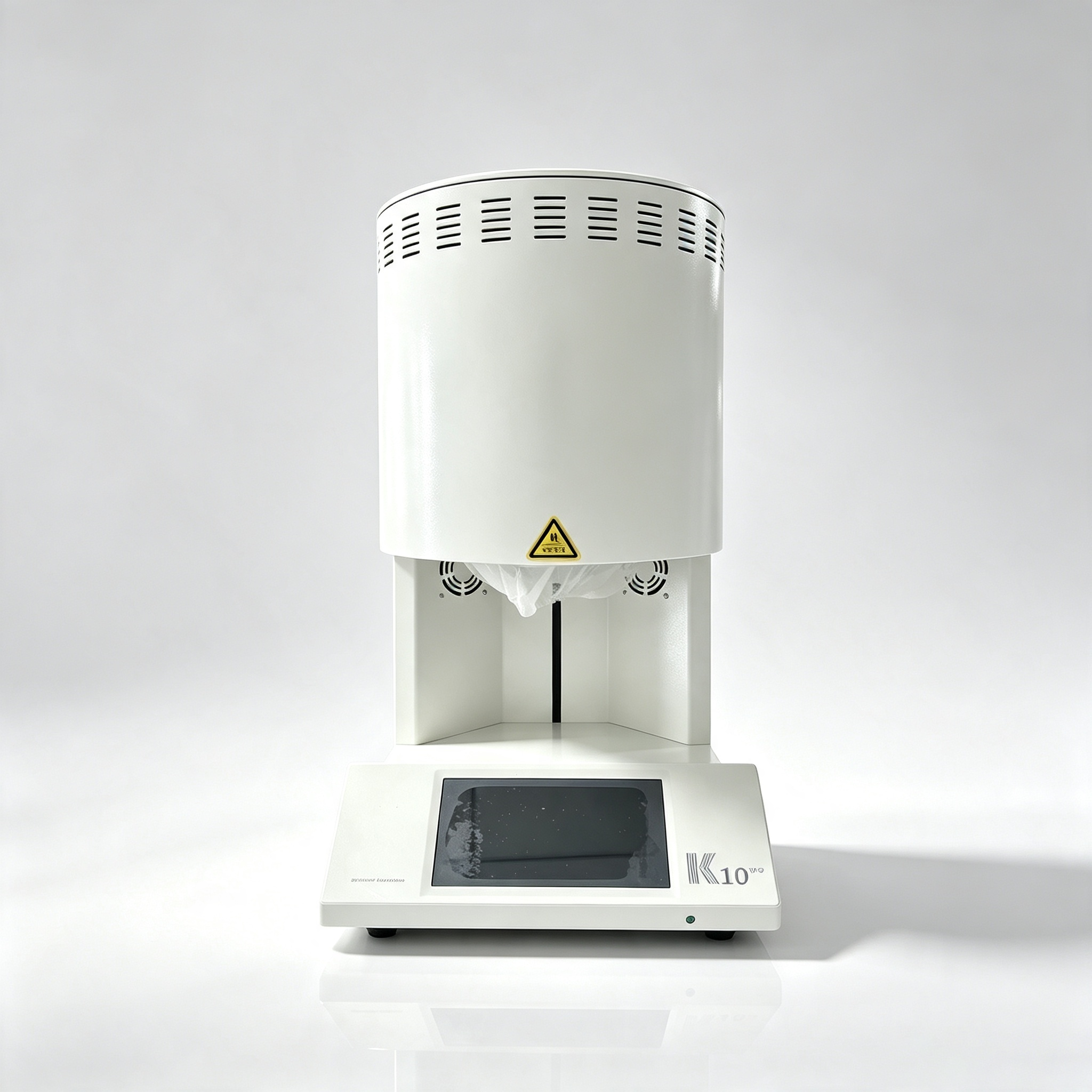
The sintering furnace chamber design and heating element distribution directly affect thermal uniformity across the firing space. A sintering furnace with uneven thermal distribution will produce restorations with variable crystallization, resulting in localized weak zones and unpredictable fracture behavior. High-quality sintering furnace systems incorporate multiple heating elements, reflective linings, and internal circulation fans to ensure temperature uniformity across the entire chamber. When a sintering furnace maintains consistent thermal conditions, every restoration fired within it achieves comparable crystal development, density, and strength, supporting reliable clinical performance and reducing quality variability from batch to batch.
Temperature Sensor Accuracy and Sintering Furnace Calibration
Accurate temperature measurement within a sintering furnace directly influences whether the actual heating cycle matches the programmed profile. A sintering furnace equipped with precise thermocouples or infrared sensors allows the control system to adjust heating rates and peak temperature in real time, maintaining the intended sintering profile. Sintering furnace temperature drift or sensor inaccuracy can cause systematic deviations from the designed profile, leading to batch-to-batch variations in restoration strength and crystalline properties. Regular calibration of the sintering furnace temperature monitoring system ensures the device consistently achieves the programmed profile, delivering predictable lithium disilicate strength across all restorations.
Clinical Implications and Practical Considerations
Impact of Sintering Furnace Profiles on Restoration Durability
Restorations processed through an optimized sintering furnace profile exhibit superior fracture resistance, margin integrity, and clinical longevity compared to those subjected to poor thermal management. A properly controlled sintering furnace maximizes the material's inherent strength by achieving full crystallization and minimizing residual stress, reducing the risk of premature failure, chipping, or catastrophic fracture in high-stress regions. Dental laboratories that invest in high-performance sintering furnace systems and follow manufacturer-recommended firing protocols generate restorations with predictable strength, reducing chair-time adjustments and patient remakes due to material failure.
Selecting and Maintaining a Reliable Sintering Furnace
When evaluating sintering furnace options, laboratories should prioritize systems with precise temperature control, uniform chamber heating, and the ability to store and recall multiple custom firing profiles for different restoration materials and thicknesses. A sintering furnace with a robust data logging system allows laboratories to verify that each cycle follows the programmed profile, supporting quality documentation and process consistency. Regular maintenance of the sintering furnace, including periodic temperature calibration, inspection of heating elements, and cleaning of thermal sensors, preserves the device's accuracy and prevents profile drift that could compromise restoration strength over time.
FAQ
What happens if the sintering furnace profile is set too high in temperature?
Excessive peak temperature in a sintering furnace causes oversintering, potentially leading to unwanted secondary crystallization phases, material weakening, and loss of optical properties. The lithium disilicate may become brittle or develop a frosted appearance due to excessive surface crystallization. Overheated restorations from a poorly calibrated sintering furnace are more prone to chipping and edge fracture, reducing clinical performance and longevity.
How does sintering furnace dwell time affect restoration porosity?
Insufficient dwell time in a sintering furnace prevents complete densification and crystal maturation, leaving the restoration with residual porosity that weakens the material and reduces fracture resistance. A sintering furnace with an optimized dwell duration allows adequate time for gas evacuation, crystal growth, and material consolidation, resulting in a dense, strong final restoration with minimal internal voids.
Can different sintering furnace systems produce different restoration strengths?
Yes, variations in sintering furnace design, temperature uniformity, heating element distribution, and temperature sensor accuracy can lead to measurable differences in restoration strength and crystalline properties across different systems. Two sintering furnace units firing identical restorations under the same programmed profile may produce slightly different results if thermal consistency, calibration accuracy, or cooling control differs between devices. Selecting a sintering furnace with proven thermal stability and regular calibration minimizes these inter-unit variations.